Use this guide as a starting point, then follow verified product labels and plant-specific care information for your actual growing setup.
Quick answer
Key takeaways
- Measure every dimension in the same unit before calculating.
- Calculate volume first, then compare it with a verified product volume.
- Do not assume that one kilogram of soil always equals one litre.
- Include access, location, and schedule details when requesting a bulk quotation.
Measure the planting area
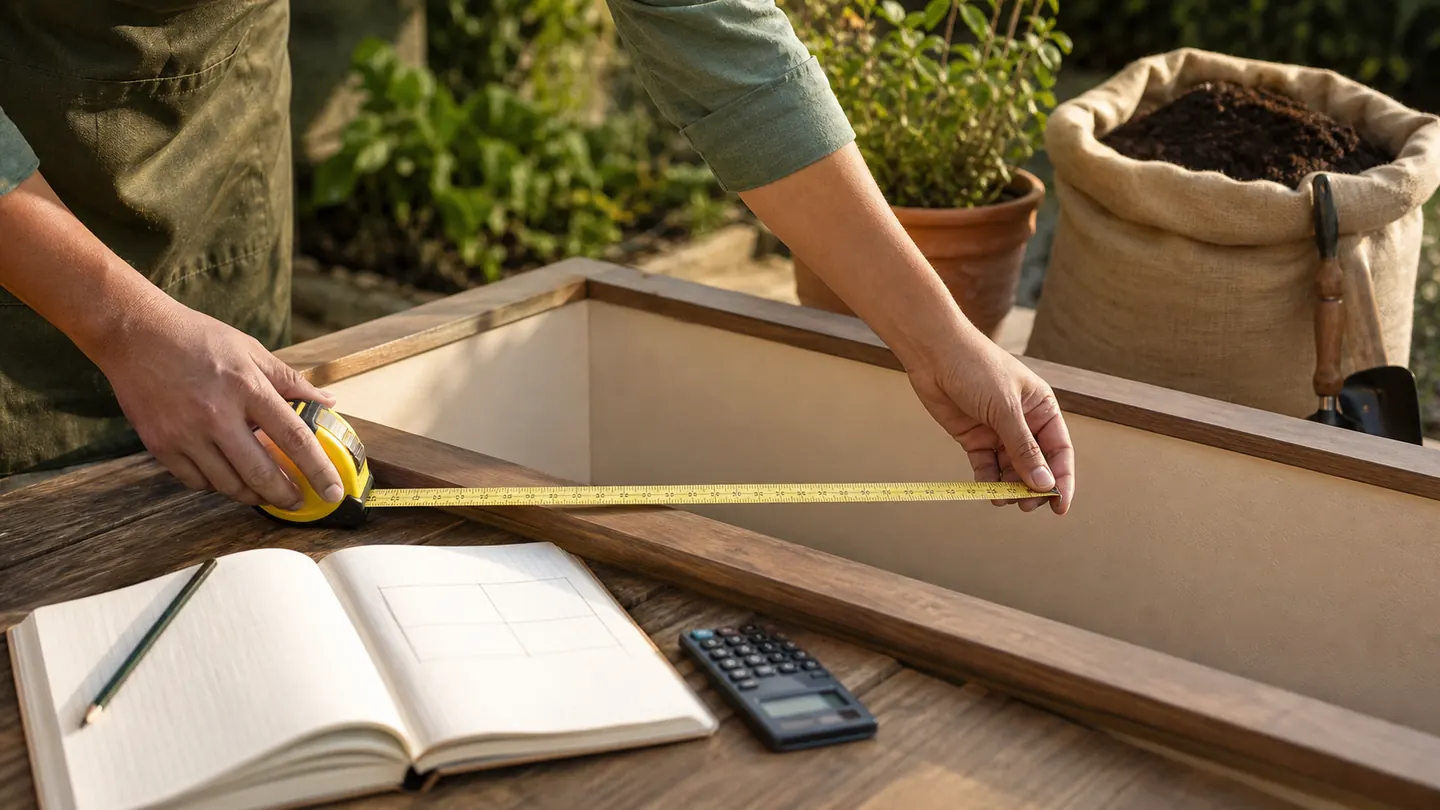
Record the length, width, and planned fill depth using the same unit. Divide irregular gardens into smaller rectangles or other simple shapes, calculate each section separately, and combine the results.
Calculate the volume
For a rectangular bed, multiply length by width by depth. For a round pot or planter, use the container dimensions or the volume supplied by its manufacturer. Keep the measurements written down so the calculation can be checked before ordering.
Match volume to the product listing
Soil products may be described by weight, volume, sack, or load, and those units are not automatically interchangeable. Use the verified product size and ask the seller for clarification instead of assuming that one kilogram always equals one liter.
Confirm larger requirements
Bulk projects can involve access, handling, delivery coverage, existing soil, and uneven fill depth. Include your measurements, intended use, product preference, location, and schedule in the quotation request so the requirement can be reviewed.
Free planning tool
Estimate your soil volume
Choose a shape and enter the inside dimensions of the area you plan to fill. Measure each separate bed or container, or use the quantity field for identical spaces.
0.2 cubic metres
Based on 1 identical space at 1 m × 1 m × 20 cm deep.
Current products may be listed by weight. Weight cannot be converted reliably to volume without a verified product value.
This is geometric capacity before existing soil, root balls, drainage layers, settling, or compaction. Weight and volume are not interchangeable because moisture and material density vary.
Common questions
Frequently asked questions
How do I calculate soil for a rectangular bed?
Multiply the inside length by the inside width by the intended fill depth. The calculator on this page accepts metres for length and width and centimetres for depth, then reports litres and cubic metres.
Can I convert kilograms of soil directly to litres?
Not reliably without a verified density or volume for the exact product. Moisture, ingredients, and compaction change how much space a given weight occupies.
Should I order extra soil?
Measure carefully first. Settling, uneven ground, and the existing fill level can affect the final requirement, so discuss a reasonable allowance with the supplier for a larger project.
Ready to explore?
Find a product for your growing project
Review the product information, then check the official Shopee store for current retail details or request a quotation for larger requirements.